Қайтейік енді
19.11.2026,
в 17:00

194
Why do its financial terms remain undisclosed? And could KazMunayGas ultimately end up paying for management decisions made by previous operators?
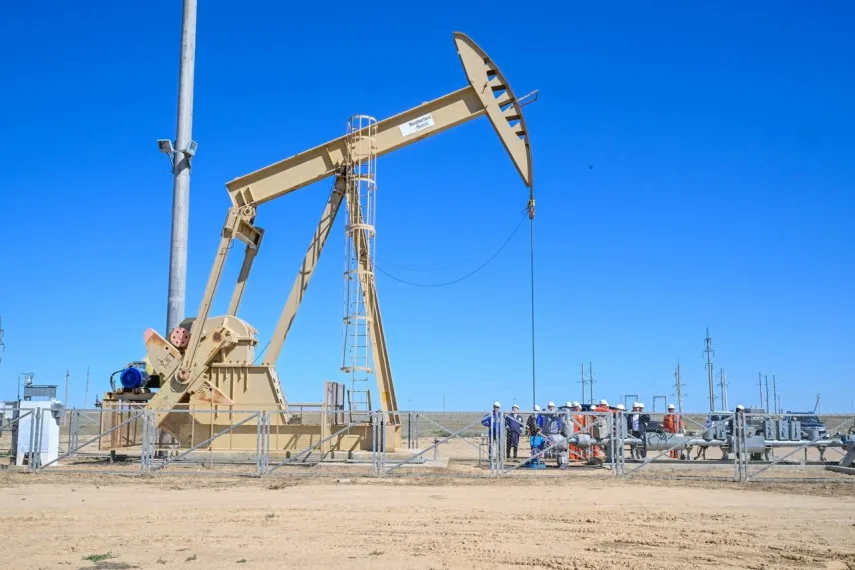
On October 5, 2026, Kazakhstan’s Ministry of Energy and Dunga Operating GmbH, the operator of the Dunga oil field in the Mangystau Region, announced that they had reached an agreement to settle disputes arising from the Production Sharing Agreement (PSA). Official press releases presented the development as an example of constructive dialogue between the state and investors and an example of a constructive approach to resolving investment disputes.
However, behind the official statements lies a story that raises numerous questions, many of which remain unanswered. Why did the state, following the acquisition of a stake in the project by the national oil company KazMunayGas, decide to challenge costs incurred under the previous operators, Denmark’s Maersk Oil and France’s TotalEnergies? How much money was at stake, and what amount did the parties ultimately agree to? Will the financial consequences of past investment decisions ultimately be borne by a company now controlled by KazMunayGas? And was the settlement part of a broader effort to prepare Dunga for the arrival of a new foreign partner?
Documents and corporate disclosures make it possible to reconstruct much of the background to the dispute. Yet they still do not answer the central question: exactly how much did Kazakhstan agree to recognize as recoverable costs, and on what terms was the dispute ultimately settled? This lack of transparency makes the October 5 agreement look less like the end of the story and more like the beginning of an investigation.
According to Kazakhstan’s Minister of Energy, Erlan AKKENZHENOV, the dispute concerned the contractor’s costs incurred between 2013 and 2019, which the state refused to recognize as recoverable under the Production Sharing Agreement (PSA).
This distinction is crucial. Unlike a conventional commercial contract, a production sharing agreement establishes a specific mechanism for allocating extracted oil. The contractor is first entitled to recover approved costs associated with developing the field through what is known as “Сost oil». The remaining production is then divided between the state and the investors in accordance with the terms of the agreement.
This is why the recognition of costs has direct financial implications for Kazakhstan. The more costs are recognized as recoverable, the greater the volume of Cost Oil the contractor is entitled to receive, leaving a smaller share of production to be distributed as Profit oil. In other words, the dispute was not simply about the accuracy of accounting records. It concerned how much of the extracted oil should be allocated to recovering the contractor’s investment costs and how much should accrue to the state.
It should be emphasized once again that neither the Ministry of Energy nor the operator has disclosed the specific cost items under dispute, the amount claimed, or the final settlement amount, citing a confidentiality agreement. Nor has any publicly available information been found regarding arbitration proceedings that may have been initiated earlier. The minister himself stressed that the parties had managed to reach an agreement without lengthy court proceedings.
Thus, as of now, the settlement itself has been confirmed, but its financial terms remain undisclosed.
Could the origins of the dispute between the state and the investor be traced back to the events of 2013–2015? It was during this period that Denmark’s Maersk Oil began implementing the second phase of the Dunga field development programme. The plan called for approximately $1 billion in investment, the drilling of 198 new wells, and the simultaneous deployment of four drilling rigs.
Under the plan, Dunga’s production was expected to rise from approximately 7,000 to 30,000 barrels per day within two years. Some publications at the time cited an even more ambitious target of 43,000 barrels per day.
The actual results fell considerably short of expectations. In 2015, Maersk recognized a substantial impairment of its Kazakh assets. According to the company’s annual report, Dunga’s property, plant and equipment were written down by $418.4 million, while the total loss recorded on the project amounted to $424.8 million.
One of the reasons for the production shortfall was delays in connecting drilled wells to the production system. Of the 198 wells planned, 171 had been drilled by 2015, when drilling was suspended indefinitely. By 2019, 61 of those wells were still awaiting connection as part of the third phase of field development.
The investments — whether actually made or merely recorded in the accounts — had failed to translate into production or revenue.
Production figures further illustrate the gap between initial expectations and actual performance. In 2015, output stood at approximately 12,700 barrels per day. It rose to 15,500 barrels per day in 2018 before falling to around 7,400 barrels per day in 2022.
Against this backdrop, one possible explanation emerges: the state refused to recognize some of the costs associated with Maersk’s second development phase precisely because the programme failed to deliver the promised production results.
However, an important caveat is necessary. A shortfall in production relative to planned targets does not, in itself, mean that the costs incurred were unjustified or ineligible for recovery under the PSA. Establishing this would require examining the terms of the agreement, approved budgets, work programmes, audit findings, and the specific objections raised by the Kazakh side. None of these documents is currently available in the public domain.
Nevertheless, the coincidence of large-scale investment, production problems, and the subsequent dispute over recoverable costs lends weight to this explanation.
What else caught the auditors’ attention? Find out in the next piece of our investigation.
Photo: kmg.kz.
SHARE YOUR OPINION AND DISCUSS THE ARTICLE ON OUR TELEGRAM CHANNEL!
16.11.2026,
13:00
13.11.2026,
09:00
17.11.2026,
12:00
18.11.2026,
12:00
14.11.2026,
16:00

 Анастасия Багрова