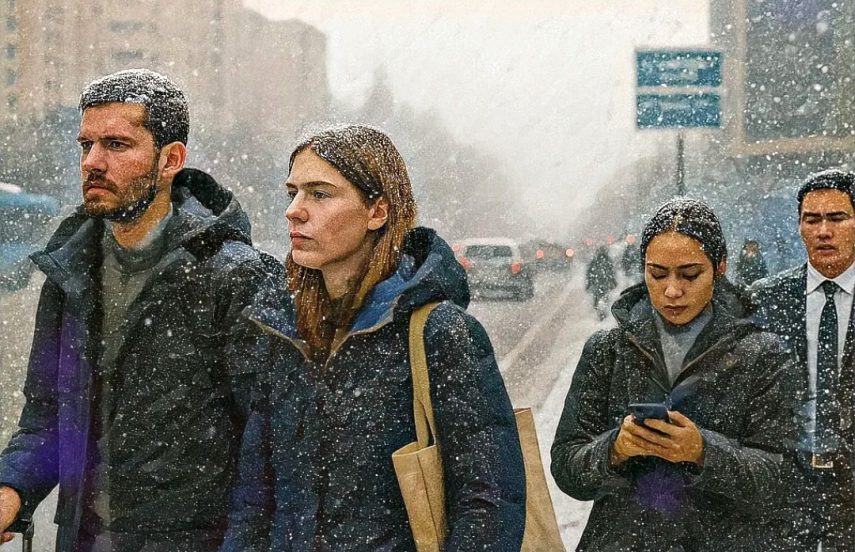
In September 2022, northern Kazakhstan’s border crossings experienced huge surges as tens of thousands of Russians fled mobilization for the war in Ukraine. In Almaty and Astana, rental prices soared to historic highs, and social infrastructure came under intense pressure. At the time, the influx seemed poised to destabilize the country’s established equilibrium.
Two years on, the situation has transformed. The initial surge subsided, and spontaneous migration underwent a natural filtering process. Many who saw Kazakhstan as a temporary stop have moved on or returned to Russia. Those who made a conscious decision to stay have legalized their status and integrated into the local economy.
Despite initial fears, the mass relocation did not damage Kazakhstan’s economy. On the contrary, the so-called “Russian exodus” accelerated Almaty and Astana’s evolution into cosmopolitan urban centers, while introducing lasting economic shifts.
Understanding the impact of the mass migration requires distinguishing transient travelers from those who settled. During the peak in autumn 2022, more than 400,000 Russian citizens crossed the border, though most quickly departed Kazakhstan.
According to Kazakhstan’s Interior Ministry, from January 2023 to September 2024, more than 80,000 Russian citizens received residence permits for work. Including family members and remote workers, the core of the relocated population can be estimated at 100,000–120,000 people.
Those who remained form a skilled urban middle class, IT specialists, engineers, doctors, and entrepreneurs, largely aged 25 to 40. When the “visa run” legal loophole allowing stay extensions by briefly exiting the country was abolished in January 2023, many were forced to legalize their presence. The rule change pushed many relocants to formalize their stay through work contracts or business registration, which in turn made their economic activity more visible to the state.
By the end of 2023, the number of registered legal entities with Russian participation exceeded 18,000, a 70% increase. In 2024, that number rose to more than 23,000.
The arrival of tens of thousands of solvent consumers brought not only capital, but also the consumption habits of Russia’s megacities. International institutions, including the IMF, have acknowledged that Kazakhstan’s 2023 GDP growth was supported in part by robust domestic demand. Spending surged in restaurants, delivery services, taxis, and gyms, especially in Almaty and Astana. This boost helped small and medium-sized businesses recover from the pandemic.
Russian entrepreneurs, opening everything from coffee shops to architecture firms, raised service standards and intensified competition. Local businesses responded by improving their quality and digitalizing operations. However, this also pushed up consumer prices, contributing to inflation and affecting local purchasing power.
Housing remains the most visible pressure point. While the panic of late 2022 has passed, rents remain well above pre-crisis levels. Analysts estimate that average house prices are still 40% higher than in 2021. This has fueled gentrification, with central Almaty’s “Golden Square” and elite areas of Astana becoming expat enclaves. Students, public sector workers, and young families have increasingly been pushed to the outskirts, increasing commuting times and straining public transport.
Many relocants are transitioning from tenants to homeowners, bolstering demand in the mid to high-end housing segments.
Fears that migrants would displace local workers have largely failed to materialize. While competition has intensified in some white-collar sectors, particularly IT, Kazakhstan has benefited overall.
The national tech park, Astana Hub, has seen dramatic growth. Relocated startups and global players, such as inDrive, Playrix, and MyTona, have boosted Kazakhstan’s IT service exports. By 2023, Kazakhstan’s IT exports had surpassed $500 million, with Astana Hub residents alone exporting over $280 million worth of services. President Kassym-Jomart Tokayev has since set a $1 billion IT export target by 2026.
In other corporate sectors, such as marketing and consulting, there is tension, with local professionals facing wage pressure from relocated workers willing to accept lower salaries. Still, this dynamic has prompted many Kazakh professionals to upskill and compete more effectively.
Socially, the integration process is mixed. Many relocants are enrolling in Kazakh language courses, viewing this not just as a practical necessity but also as a gesture of respect. Unlike earlier migration waves marked by colonial overtones, today’s arrivals tend to reject imperial narratives and express respect for local culture.
Still, complete assimilation is rare. In Almaty and Astana, many relocants operate in semi-insular “bubbles,” frequenting familiar venues and working in coworking spaces. However, these communities are not closed: business partnerships and mixed work teams are gradually blurring the lines between old and new residents.
The key question now is whether these relocants will remain if the war ends. Indicators such as school enrolments, business formation, and mortgages suggest that a significant share of relocants have put down roots.
Kazakhstan has gained an unexpected demographic and intellectual dividend. The initial shock of migration has been transformed into economic opportunity. The next challenge lies in administration, ensuring the successful integration of this new class of taxpayers without triggering social imbalance or resentment among the native population.
By The: The Times Of Central Asia.
Image: TCA, Stephen M. Bland.
SHARE YOUR OPINION AND DISCUSS THE ARTICLE ON OUR TELEGRAM CHANNEL!

09.09.2026,
15:00
12.09.2026,
12:00
11.09.2026,
12:00
09.09.2026,
12:00
14.09.2026,
12:00


 Хроника