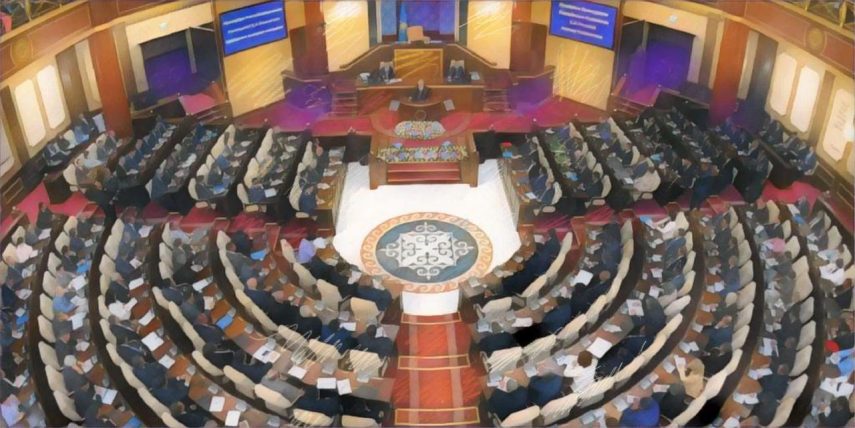
The Kazakh government is actively developing the framework for a future unicameral parliament, working to define its status, powers, and functions. Currently, Kazakhstan’s legislative branch consists of two chambers: the Senate and the Mazhilis.
The proposed transition to a unicameral system has been positioned by authorities as a step toward democratization. However, many citizens remain unclear about the details and implications of the reform, particularly as inflation and declining living standards dominate public concern.
In September 2025, President Kassym-Jomart TOKAYEV proposed holding a nationwide referendum on transitioning to a unicameral parliament in 2027. While some analysts have speculated about a faster timeline, no official acceleration beyond 2027 has been announced.
“The establishment of a parliamentary republic is not under consideration. The foundational model of a ‘Strong President, Influential Parliament, Accountable Government’ remains unchanged,” Tokayev previously stated.
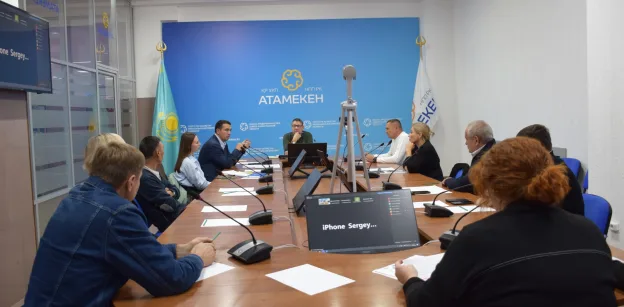
According to political analyst Gaziz ABISHEV, pivotal developments are expected on January 20, when the National Kurultai (Assembly) convenes. He believes this meeting will outline the contours of constitutional reform and potentially signal a date for the referendum.
“If the decree on holding a referendum is signed during the Kurultai, the vote could be held on March 22 [2026],” Abishev stated.
Under the current system, the Senate represents regions and appointive quotas, reviewing legislation passed by the Mazhilis and serving as a constitutional buffer. Any move to unicameralism would require redefining how regional interests are represented and how legislative oversight is maintained without an upper chamber.
The National Kurultai serves as a platform for dialogue between the government and society, addressing national identity, economic development, social justice, and improving the quality of life. Historically, the Kurultai was a gathering of Turkic and Mongol tribes.
Public discussion around the proposed unicameral parliament has been active. Since the launch of a dedicated “Parliamentary Reform” section on the state portals e-Otinish and Egov, over 500 proposals have been submitted by citizens, experts, and public organizations.
Despite this engagement, tangible benefits for ordinary citizens remain vague, aside from a potential reduction in government spending.
Globally, more than half of national parliaments operate as unicameral systems. According to IPU Parline, 107 out of 188 legislatures follow this model, primarily in unitary states with smaller populations. Unicameral systems are often praised for faster legislative processes, lower administrative costs, and increased transparency.
Kazakhstan previously had a unicameral legislature under the 1993 Constitution. Following the invalidation of the 1994 elections, the Supreme Council was dissolved. In 1995, the country transitioned to its current bicameral system. The Senate, as the upper house, plays a stabilizing and arbitration role. Analysts caution that without a second chamber, legislative processes may be vulnerable to hasty or populist decisions.
Abishev suggests that a referendum in March 2026 could prompt an early electoral cycle.
“Under the current schedule, the next Mazhilis elections are set for January 2028. However, they could be moved up to summer 2026 if Parliament adopts a constitutional amendment package in April or May following the referendum,” he noted, adding that a new legislative structure would need to be implemented.
He also emphasized the link between political stability and Kazakhstan’s economic outlook. “Oil prices could decline due to global oversupply, and sanctions pressures, stemming from the ongoing war, will increase, affecting both primary targets and surrounding states,” Abishev warned. “The budget deficit and new tax policies will continue to strain the economy.”
He argues that if the medium-term economic forecast for 2027-2028 remains unfavorable, an early reset of parliamentary mandates extending through 2031 may be a rational choice.
On social media, public reaction to the proposed parliamentary reform has been tepid. Many citizens argue that the government should prioritize the economy, not constitutional changes. The central concern remains inflation and its impact on living standards.
In 2025, inflation in Kazakhstan reached 12.3%. The sharp rise in prices has persisted since 2022, when the war in Ukraine disrupted supply chains and subjected Kazakhstan to indirect sanctions pressure. Many consumer goods in Kazakhstan are imported from Russia, where sanctions have directly influenced pricing.
Adding to public concern, a new Tax Code came into effect on January 1. The most controversial change is a hike in the value-added tax (VAT) from 12% to 16%.
Economists warn that the first quarter of 2026 will bring another surge in prices. This prediction has already begun to materialize: retailers across Kazakhstan are posting notices attributing higher prices to the VAT increase. In this climate, most Kazakhs are more preoccupied with daily survival than with parliamentary restructuring.
By The: The Times Of Central Asia.
Image: TCA, Aleksandr Potolitsyn.
SHARE YOUR OPINION AND DISCUSS THE ARTICLE ON OUR TELEGRAM CHANNEL!

16.09.2026,
12:00
12.09.2026,
12:00
11.09.2026,
12:00
14.09.2026,
12:00



 Хроника