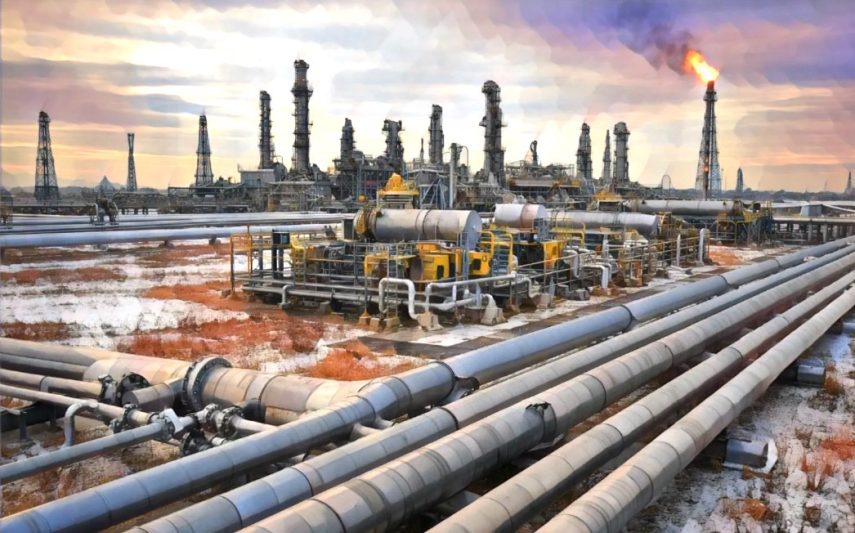
In late January 2026, international media reported that Kazakhstan had won a significant arbitration case against the shareholders of the Karachaganak oil field, with compensation estimated between $2 billion and $4 billion. The Ministry of Energy has not commented on the substance of the ruling, citing confidentiality, though experts say it strengthens Kazakhstan’s position in ongoing legal proceedings related to the Kashagan oil field.
According to Bloomberg and Reuters, the Kazakh government initiated legal action in 2023 over what it described as unjustified cost deductions. Originally filed for $3.5 billion, the claim later expanded to include additional allegations, such as inflated expenses tied to corruption.
In 2025, the shareholders of Karachaganak Petroleum Operating proposed settling the dispute by financing a domestic gas processing plant in Kazakhstan. The government rejected the proposal, however, and arbitration continued, resulting in a ruling in favor of Kazakhstan. Sources familiar with the proceedings said the consortium, led by Eni and Shell, has been ordered to pay compensation of up to $4 billion. The tribunal has yet to finalize the exact amount. As the arbitration process remains confidential, sources requested anonymity, noting that the Karachaganak consortium still has the option to appeal.
While the ruling represents a partial victory, Kazakhstan had originally sought a significantly higher sum; the tribunal accepted the government’s core argument: under the production sharing agreement (PSA), the consortium charged the state for unapproved and non-reimbursable expenses.
Kazakhstan’s external legal advisers estimate the final payment will range between $2 billion and $4 billion. According to sources familiar with the proceedings, the recovery mechanism will likely involve revisions to the oil distribution formula within the PSA.
In its written decision, the tribunal referenced Kazakhstan’s own admission that it had tolerated “corruption and kleptocracy” until 2022. A source familiar with the ruling said Kazakh officials had accepted bribes to approve inflated costs at Karachaganak, expenses that were then inappropriately reimbursed by the state.
During the arbitration, Kazakhstan’s legal team presented documents from criminal proceedings in Italy. These revealed that, in 2017, several Italian contractors pleaded guilty to bribing Kazakh officials to secure contracts at both Karachaganak and the Kashagan offshore field.
Oil and gas analyst Olzhas BAIDILDINOV said the ruling gives Kazakhstan a stronger position in the Kashagan case. He asserted that Kazakhstan can now “firmly defend its rights in major oil and gas projects,” and that the “decades of privileged status enjoyed by foreign oil and gas majors in Kazakhstan’s oil industry are over.”
Baidildinov added that the operating models at Karachaganak and Kashagan are likely to be restructured and possibly “de-Italianized”.
He also criticized the national oil company, KazMunayGas, for its silence on the Tengizchevroil (TCO) expansion project, whose capital expenditure has surged from $12 billion to $48.5 billion. Drawing comparisons to Uzbekistan, Baidildinov noted that former Uzbekneftegaz head Bahodir Sidikov was dismissed in December 2025 and later detained on corruption charges. In the same month, presidential energy adviser Alisher Sultanov was also removed.
“I’m astonished that, while regional Kazakh officials are being arrested for bribes worth mere hundreds of thousands of tenge, we continue to accept the TCO budget of $48.5 billion without scrutiny,” said Baidildinov. “That’s 33 times the cost of the Burj Khalifa, six times the price of the Large Hadron Collider, and more than the infamous Kashagan offshore project, even though Tengiz is an onshore field with existing infrastructure.”
Baidildinov concluded that senior figures overseeing Tengiz at KazMunayGas should be held accountable.
Business analyst Abzal NARYMBETOV observed that Kazakhstan has rarely prevailed in large-scale disputes over the past 15 years, describing the Karachaganak ruling as a turning point that signals Kazakhstan’s evolution beyond its traditional role as a “raw material territory.” He also believes the experience gained from this case will prove valuable in future litigation over Kashagan.
“Many are calling for a statement from the Ministry of Energy,” Narymbetov said. “But the ministry has made clear it cannot comment for now. In international arbitration, any premature or triumphant remarks from government agencies could provide grounds for appeal or obstruct payment enforcement. It appears the ministry is completing the process discreetly to ensure funds are properly transferred to the state budget”.
By The: The Times Of Central Asia.
Image: TCA, Stephen M. Bland.
SHARE YOUR OPINION AND DISCUSS THE ARTICLE ON OUR TELEGRAM CHANNEL!
16.09.2026,
12:00
12.09.2026,
12:00
11.09.2026,
12:00
14.09.2026,
12:00


 Хроника