

Kazakhstan’s Ministry of Transport has released an interim update on the investigation into the crash of an Embraer 190 aircraft operated by Azerbaijan Airlines, which went down near the city of Aktau one year ago during a passenger flight from Baku to Grozny. The incident triggered a major diplomatic rift between Russia and Azerbaijan, straining bilateral relations for months, though ties have recently begun to stabilize. The update was published in an official statement dated December 25, 2025, marking the first anniversary of the tragedy.
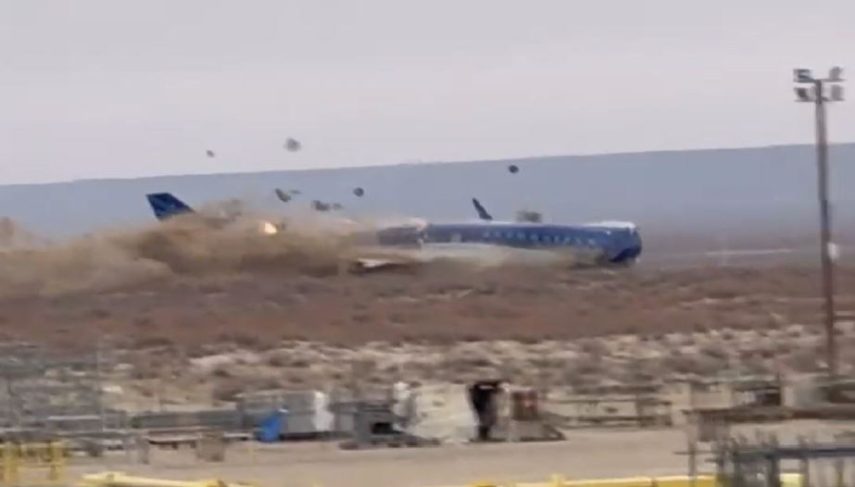
According to the ministry, the aircraft, registered as 4K-AZ65 and operating flight J2-8243, crashed on December 25, 2024, near Aktau in western Kazakhstan. The disaster claimed the lives of 38 people, including three crew members, while 29 others sustained injuries of varying severity. The investigation is being led by a special commission under the Ministry of Transport, established by ministerial order the day after the crash.
The ministry emphasized that the investigation is being conducted in full compliance with Annex 13 of the Convention on International Civil Aviation. Under these international standards, the purpose of an aviation accident investigation is solely to prevent similar incidents in the future, not to assign blame or determine legal liability. Separately, the Kazakh authorities confirmed that a parallel criminal investigation is being conducted by law enforcement agencies. As required under International Civil Aviation Organization (ICAO) rules, these two processes are proceeding independently.
The interim report notes that accredited representatives from Azerbaijan, Russia, and Brazil are participating in the investigation, along with an observer from ICAO. A preliminary report was previously issued on February 4, 2025.
Investigators have collected and analyzed a broad array of data, including information on the flight crew, air traffic control, airline operational procedures, flight planning documents, weather conditions, and maintenance records. Copies of the aircraft’s logbook and other relevant documents have also been obtained.
Significant progress has been made in examining the aircraft’s flight recorders. Information from the flight data recorder has been successfully extracted and decoded, and the cockpit voice recorder has been fully analyzed. A detailed inspection of the crash site has been conducted, including mapping the distribution of debris. Key components were documented, photographed, collected, and transported for further study.
Several specialized forensic examinations were also conducted. Analyses of foreign metallic objects found at the site, including trace, ballistic, explosive, and fire tests, did not reveal any traces of explosive substances. No signs of detonation were found on the three oxygen cylinders submitted for testing. However, investigators concluded that damage to the aircraft was likely caused by external metallic fragments “consistent with fragments that may resemble warhead components,” although their origin could not be definitively identified.
A separate analysis of hydraulic system No. 2 revealed that the tubing had sustained rupture damage due to impact with solid objects. Experts determined that the punctures were likely caused by external metal fragments composed of iron-based alloys such as steel.
Investigators also attempted to recover data from the aircraft’s Central Maintenance Computer, manufactured by Honeywell International. Due to severe thermal damage, data retrieval was not possible. According to the interim report, and based on Honeywell’s recommendations, Kazakhstan’s investigation team is now coordinating with the U.S. authorities to conduct further analysis at the facilities of Delkin Devices, the manufacturer of the memory card. Meanwhile, analysis of GPS units retrieved from the avionics modules has been completed, and the findings are under review.
Two dedicated working groups have been formed as part of the investigation. One group is reviewing how flight risks were assessed over or near conflict zones, in line with ICAO guidance. This includes examining documents from the Russian and Azerbaijani aviation authorities and Azerbaijan Airlines, as well as reviewing coordination between civil and military aviation. The second group has reconstructed components of the aircraft’s hydraulic system in Aktau to study the sequence of technical failures.
The Ministry of Transport noted that the timeline for completing the investigation depends on the results of the remaining technical analyses. Once finalized, the full report, including conclusions, contributing factors, and safety recommendations, will be published on the ministry’s official website.
By The: The Times Of Central Asia.
Image: TCA, Aleksandr Potolitsyn.
SHARE YOUR OPINION AND DISCUSS THE ARTICLE ON OUR TELEGRAM CHANNEL!
Реклама
05.03.2026,
13:30
04.03.2026,
15:00
05.03.2026,
09:00
06.03.2026,
14:00

Реклама
Реклама

 Хроника